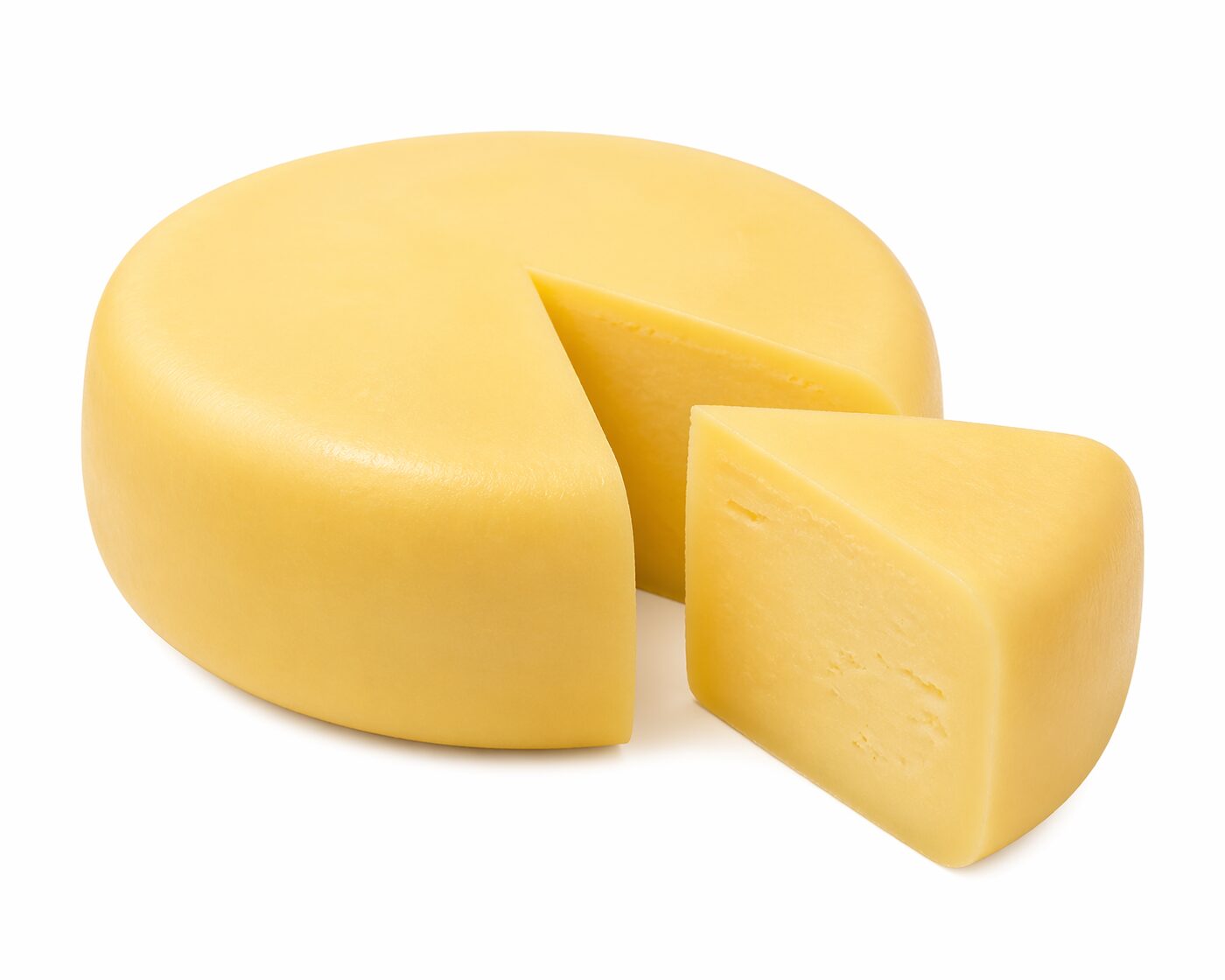
Emulsifying salts sit at the heart of every successful block kashkaval. For producers working with a steam-heated twin-screw cooker, Technofood MS 31 and MS 85 offer two complementary tools — one delivering structural firmness, the other superior remelting behaviour. Used alone or in blend, they let you tune each batch to its intended use: table cheese, pizza cheese, or both.
Meet the Two Salts
Technofood MS 31
Composed of sodium phosphate (E339), polyphosphate (E452) and triphosphate (E451). Its high ion-exchange capacity and low creaming behaviour make it the natural choice for block kashkaval produced on a twin-screw steam cooker — delivering firmness, clean sliceability and excellent water-holding capacity.
Technofood MS 85
A blend of trisodium citrate (E331), polyphosphate (E452) and triphosphate (E451). Also dosed into the twin-screw steam cooker, MS 85 leverages the citrate fraction to deliver outstanding remelting properties — a key requirement for pizza and oven-bake applications.
How to Use the Two Salts Together
Both MS 31 and MS 85 can be used as stand-alone salts or blended together in the kashkaval recipe. MS 31 drives firmness and sliceability; MS 85 adds firmness alongside excellent remeltability. The right ratio depends on what you want the final cheese to do.
or 80/20 MS 31 / MS 85
For kashkaval that holds firmness throughout shelf life. A small share of MS 85 adds a touch of melting character without softening the block.
50% MS 85
A balanced recipe giving both good firmness and good melt — a kashkaval suitable for table use and for pizza.
20% MS 31
For excellent remelting capability in the oven — ideal when the cheese is intended primarily for cooking and hot-melt applications.
How Much to Use in Dry-Cooked Kashkaval
For a full-fat kashkaval at 55% dry matter, target approximately 1% of the curd mass, used either as a single salt or as a blend. Because MS 31 and MS 85 have slightly different ion-exchange capacities, fine-tune the dosage during production trials to match your specific curd and process.
For reduced-fat products, dosage typically needs to increase. The lower fat content raises the relative protein load in the cheese mass, which in turn demands more emulsifying salt to achieve proper emulsification.
Important Notes & Troubleshooting
Total dosage is around 1% of curd mass whether you use MS 31 alone, MS 85 alone, or the two blended together.
If the cheese mass does not absorb water during cooking: the curd pH may be too low, or the dosage is too low for the curd you are working with.
If the dosage is slightly too high at the correct acidity: the final structure may break — the cheese will lose its clean block character.
If the dosage is significantly over target: the product can become too fluid to work with on the line.
In practice, the most reliable approach is to nail the curd pH first, then dial in dosage between 0.9% and 1.1% based on fat content and desired end-use. Once a producer hits the right window for their equipment, batch-to-batch consistency becomes straightforward.
Want to see it run on your line?
We'd be happy to arrange a free product manufacturing demonstration at your facility. Our technical team will come with the know-how, the product, and the answers to your questions.
Request a Demo